
Why So Many Americans Still Get the JFK Assassination Wrong
A year after my viral conversation with Ben Shapiro, a deeper look at why conspiracy theories persist despite the evidence.

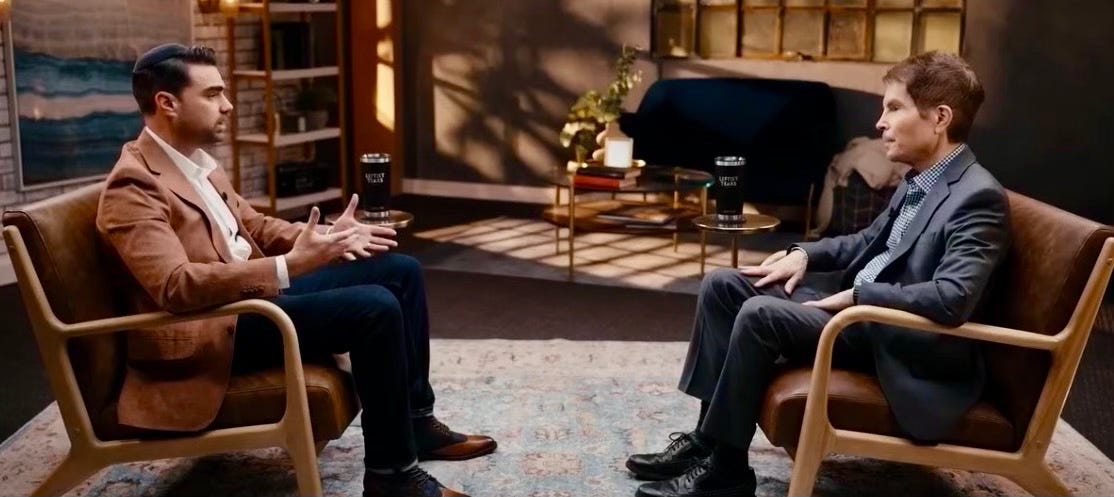
A year ago today, a conversation I had with Ben Shapiro about the JFK assassination went viral. That did not surprise me nearly as much as the reason it happened. More than six decades after President Kennedy was murdered in Dallas, the case still exerts a strong gravitational pull on the American imagination. It is not simply that people remain interested. It is that so many still resist the most basic conclusion supported by the overwhelming evidence: Lee Harvey Oswald killed John F. Kennedy.
That should not still be controversial. Yet it is.
I have reported for decades on real and imagined conspiracies. There is an important difference. Real conspiracies leave evidence trails. People meet, talk, plan, and conceal. Eventually one of them slips, financial records surface, witnesses emerge. The lies do not remain perfectly sealed forever. As an attorney, I understand that is how complex conspiracy cases are brought and proven in courtrooms. It is also why the mythology around the Kennedy assassination has always said more about us as a society than about the crime itself.
The case against Oswald is overwhelming. The forensic evidence, ballistics, eyewitness testimony, the rifle, sniper’s nest, his movements before and after the shooting, his flight from the Texas School Book Depository, and then his cold-blooded murder of Dallas police Officer J. D. Tippit as Oswald tried to escape, all of it points in one direction: Oswald’s guilt.
And yet the myths do not die. In some ways they multiply.
Part of that is psychological. The murder of a young and charismatic president feels too enormous, too consequential, too world-shaping to have been carried out by a failed, unstable 24-year-old drifter. People resist the simple answer because it does not seem proportionate to the scale of the event. That instinct has a name: proportionality bias. Many people instinctively assume that a huge historical event must have an equally huge hidden cause. So, a lone assassin feels unsatisfying. The mind goes looking for something grander, darker, more elaborate.
That is where bad history enters and where bad actors thrive.
The JFK case has been fed for decades by recycled falsehoods, selective use of “evidence,” invented connections, and a steady stream of repackaged and debunked claims dressed up as new revelations. Some old fantasies get a new digital life. Some are fresh enough to benefit from the speed and gullibility of social media. What has changed is not the quality of the evidence behind these theories. It is the online machinery available to spread them.
A good example is the recurring effort to pin the assassination on Lyndon Johnson. Every few years, some supposed tape, witness, deathbed confession, or murky anecdote resurfaces and is treated by credulous commentators as if it changes everything. It never does. The same is true of claims that the CIA orchestrated the murder. The agency’s actual conduct before and after the assassination gives critics plenty to scrutinize. I have long been a critic of the CIA, particularly its decision after the assassination to hide from the Warren Commission its partnership with the mafia in plots to kill Fidel Castro rather than fully assist in answering questions about Oswald.
The CIA had Oswald on its radar after his Soviet defection. It failed to share information as effectively as it should have. It engaged in bureaucratic self-protection. It also concealed embarrassing and reckless covert operations that had nothing to do with the murder of the president but which the Agency considered embarrassing. It took over sixty years to get some of those documents released in the JFK files. None of that is flattering. But bureaucratic incompetence and institutional cover-your-own-backside behavior are not the same thing as proof that the agency murdered a president.
That distinction is critical.
It also matters now because one of the ugliest new strains of JFK conspiracy culture has been the effort to blame Israel for Kennedy’s assassination. There is no credible evidence for it. None. It is not a serious theory grounded in credible research. It is an opportunistic and viral smear that taps into one of the oldest and most durable forms of political poison: the idea that Jews are secretly behind every major world event. Conspiracy theories have always had a way of circling back to familiar prejudices. This one is no different. Dress it up in the language of declassification, intelligence files, or foreign policy disputes, and it is still the same awful structure underneath.
That is one reason this conversation with Ben resonated so widely. We were not just talking about who killed Kennedy. We were talking about why people cling to bad explanations even when the evidence is sitting in plain sight. We were talking about the confusion of correlation with causation. We were talking about the seduction of motive. People assume that because a person or institution may have benefited from an event, they must therefore have caused it. But benefit is not proof. Suspicion is not proof. Evidence is proof.
The Kennedy assassination has long functioned as a kind of national Rorschach test. People project onto it their deepest assumptions about government, power, secrecy, corruption, and evil. For some, the official account must be false because official accounts are always suspect. For others, complexity itself becomes a marker of seriousness: the more sprawling the theory, the more intelligent it seems. But complexity is not rigor. It is often just camouflage for the absence of proof.
What has always struck me most is that the believers in endless JFK conspiracies usually treat Oswald as an empty vessel, a bit player, almost an afterthought. But Oswald is the center of the case. He is only a cipher if you choose not to look at him. Oswald had tried only months earlier to assassinate a right-wing retired Army general. Oswald had a history of ideological instability, narcissism, grievance, and violent political fantasy. He wanted to matter. If you understand Oswald, the case becomes clearer. If you erase him, the fantasies rush in to fill the void.
There is another reason the case never fully settled in the public mind: Oswald was killed two days after Kennedy was murdered. Dallas nightclub owner Jack Ruby’s shooting of Oswald ensured that the accused assassin never stood trial, never faced cross-examination, never had the evidence laid out in a courtroom. That vacuum was filled by suspicion almost immediately. Then came decades of books, films, television specials, speculative committees, and performative doubt. Oliver Stone’s 1991 JFK did more than entertain. It permanently distorted the historical understanding of the assassination for millions of people who never read the Warren Report, never studied the evidence, and never realized how much of the movie was fiction masquerading as revelation.
That damage has lasted.
And still, after all these years, after all the document releases, after all the blurred scans, redacted pages, and midnight hunts for a missing smoking gun, the core facts remain unchanged. The release of the long-anticipated JFK files has not transformed the case against Oswald because the case against him was already there. What the newer material has revealed repeatedly is not a hidden master plot to kill Kennedy. It is the all-too-familiar spectacle of government agencies protecting themselves, dodging embarrassment, withholding information, and behaving exactly as bureaucracies tend to behave when they fear blame.
That is frustrating and infuriating. It is not the same thing, however, as a murder conspiracy.
So, if you missed my conversation with Ben Shapiro, or have only seen fragments of it on YouTube clips, I think it is worth watching in full. Not because we revisit every argument in the case, and not because anyone needs another breathless tour through the usual suspects. It is worth watching because it goes to the heart of a larger problem in American life: why unsupported theories spread faster than documented facts, why people confuse suspicion with evidence, and why some historical myths endure long after the record is clear.
The JFK assassination was a national trauma. That helps explain why it remains emotionally alive. But emotional force is not the same thing as historical uncertainty. A case can be tragic, consequential, and psychologically unsatisfying while still being solved.
This one was.
If you have not seen the full conversation, it is worth watching in full. It goes directly to the questions raised here.
If you value reporting grounded in evidence rather than speculation, consider subscribing.


