
Persistence, Truth, and the Anniversary of a Book the Industry Didn’t Want
How The Pharmacist of Auschwitz became a global success—after every U.S. publisher said no.
Nine years ago today, The Pharmacist of Auschwitz was published.
My wife, Trisha Posner, had written a searing, deeply researched biography of Victor Capesius — the chief pharmacist at Auschwitz, who used his position not to heal, but to profit from genocide. The book was gripping, historically grounded, and morally urgent.
No one in the U.S. publishing world wanted it.
No agents. No editors. Not because the manuscript wasn’t strong — but because it didn’t “fit the market.” Some were blunt enough to say that readers weren’t interested in “another Holocaust book” or that “the Holocaust isn’t trending.” Others worried that it was too focused on a lesser-known figure, or too uncompromising in its portrayal of Nazi collaborators who slipped through the cracks of postwar justice.
Trisha didn’t give up.
Through sheer persistence — and without any institutional support — she got the book released in the UK by a small independent publisher. And then something remarkable happened: readers found it.
Word of mouth spread.
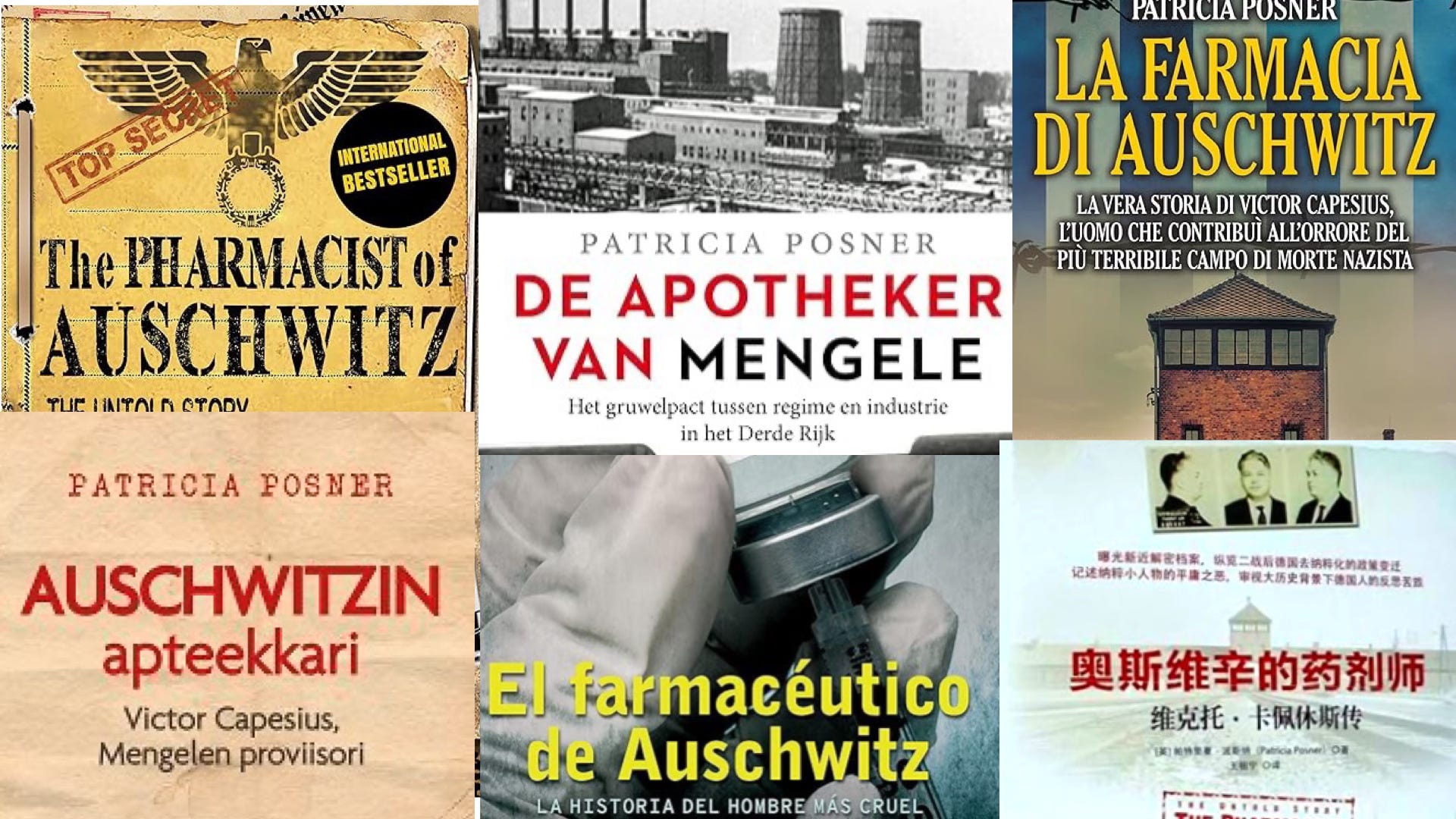
Sixteen foreign translations followed.
Film and documentary rights were optioned.
And a year after its publication, the book became a national bestseller in the U.S. — the very market that had shut the door.
Why It Still Matters
What makes this anniversary especially meaningful is that The Pharmacist of Auschwitz didn’t rely on hype, marketing gimmicks, or controversy. It was a success because it told the truth — clearly, factually, and unapologetically.
At first, the book was published without a single major U.S. review. But over time, its power broke through. Celebrated World War II historians took notice.
“A harrowing, beautifully written and extremely well-researched account of a little-known aspect of the Holocaust,” wrote Andrew Roberts, the acclaimed British historian.
“Patricia Posner’s fine prose style grips from page one, and the horror will stay with you long after you finish the book.”
Damien Lewis, bestselling author of multiple WWII histories, called it:
“Shocking. Revelatory. Compelling. A truly authentic and riveting read. A milestone in WWII and Holocaust history.”
Victor Capesius was not a name known to most people when the book came out. But his story — of a man who used medicine as a weapon, who rose from civilian life to become a tool of genocide, and who later lived free and unrepentant — is one that forces readers to confront how evil operates in plain sight.
This is the kind of history that deserves to endure.
A Personal Note
As Trisha’s husband and collaborator on other projects, I saw up close how hard she worked to bring this book into the world. I saw how fiercely she protected its integrity when others wanted her to soften the edges or make it more “market-friendly.”
She never wavered.
This anniversary isn’t just a celebration of publication.
It’s a tribute to the power of persistence — and a reminder that even when doors are slammed shut, stories worth telling will find their way.
— Gerald
📘 Want to read the book?
Find The Pharmacist of Auschwitz here:


You and Trish are fearless in your research and presentation. That is what journalism is supposed to be but too often is not. Our gatekeepers -- editors and publishers -- too often lack courage to risk stepping too far outside the former mainstream thinking. That is what is so risky when the uber-wealthy buy up all the MSM outlets that could criticize the uber-wealthy. They can't have a CBS news criticize the PTB (powers that be) lest they take it out on the advertising budget of a TV station that the parent company owns, or covering a scandal in their sitcom production or some product being sold by another division. You can't have a division rock the entire boat so you don't allow a news division to function as a news division, the purpose of which is to rock boats.
What an accomplishment! Congratulations to Trisha.