
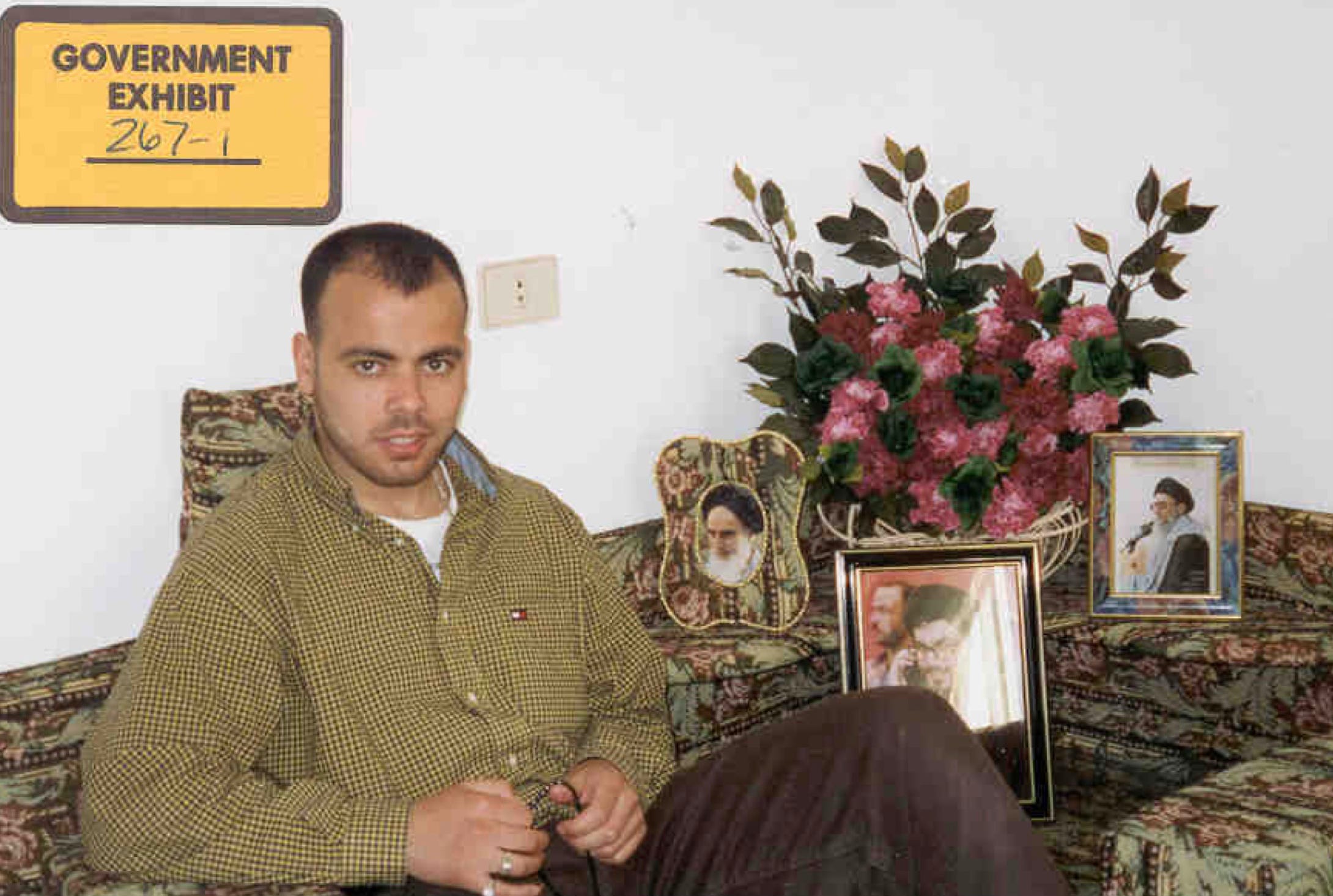
He Funded Hezbollah. The U.S. Gave Him 155 Years. Then He Walked Free.
After 23 years in prison, the first man convicted under America’s material-support terrorism law was released and deported. Now he has disappeared from public view

A terror attack at Old Dominion University this week has revived a familiar and uncomfortable question about terrorism cases in the United States: how someone previously convicted of supporting a foreign terrorist organization can receive a relatively short sentence, serve even less time, and return to the daily life in the United States without difficulty.
Federal prosecutors had asked for more than twenty years in the Old Dominion case. The judge imposed eleven. The defendant ultimately served about eight years before being released in December 2024.
That outcome has prompted outrage in some national security circles. But there is another case, largely forgotten outside terrorism law specialists and a handful of national security reporters, that illustrates how unpredictable the U.S. sentencing system can be—even when it comes to terrorism.
It involves Mohamad Youssef Hammoud, the first person ever convicted in the United States under the federal law banning material support for a designated foreign terrorist organization.
His story reads like a case study in how dramatically a terrorism sentence can change over time.
The First Major Material Support Conviction
Hammoud, a Lebanese national who entered the United States in the early 1990s, became the central figure in a major federal prosecution in North Carolina.
Investigators uncovered an extensive criminal enterprise involving cigarette smuggling, money laundering, credit card fraud, and immigration violations. According to federal prosecutors, millions of dollars from those operations were ultimately routed to Hezbollah in Lebanon.

In 2001 a superseding indictment charged 25 individuals. Four were charged with providing material support to Hezbollah.
Hammoud became the most prominent defendant.

In 2002 he was sentenced to 155 years in federal prison, one of the longest terrorism-related sentences imposed in the United States at the time.
Two years later the Fourth Circuit Court of Appeals upheld the conviction in a lengthy opinion detailing the evidence tying the smuggling network to Hezbollah fundraising operations.
But the legal story did not end there.
From 155 Years to 30
After subsequent Supreme Court rulings on federal sentencing guidelines, Hammoud was resentenced in 2011.
The new sentence: 30 years in prison.
That reduction alone dramatically changed the timeline of his incarceration. Yet another shift was still ahead.
The First Step Act
In 2018 Congress passed the First Step Act, a bipartisan criminal justice reform law backed by the Trump administration.
The legislation was promoted by a wide coalition of political figures and activists advocating prison reform. Among the most visible advocates was Kim Kardashian, who lobbied the White House on sentencing issues and helped draw public attention to the bill.
The law expanded mechanisms allowing prisoners to seek sentence reductions or compassionate release and advocates said that many African American inmates incarcerated for nonviolent crimes would be the Act’s primary beneficiaries.
Hammoud cited the First Step Act in seeking early release.
Federal prosecutors and the Biden administration opposed the request, arguing that he had not demonstrated extraordinary circumstances required under the Act and that his release could pose public safety concerns given the nature of his terrorism convictions. They also cited several of his prison disciplinary infractions.
Despite those objections, a federal judge in North Carolina granted the motion in June 2023, citing “sentencing disparities” and the impact of terrorism sentencing enhancements in the original case.
Hammoud was released after serving roughly 23 years. On his release, he said he “would be proud” to fund Hezbollah again.
A Hero’s Welcome
At least the second Trump administration handled the next step correctly. ICE detained him quickly and deported him to Lebanon.
At Beirut’s airport he was greeted by supporters and hailed as a hero.

In subsequent appearances at Hezbollah events and on Hezbollah-aligned media outlets, Hammoud expressed pride in his past activities. He was celebrated as a symbol of resistance after decades in an American prison.
And Then He Disappeared
Then, sometime late last year, the appearances stopped. Since then his whereabouts have become unclear.
U.S. authorities assure me that his name is on on the terrorism watchlist, preventing any return to the United States. Assuming he did not come back into the country during the last year when the border was open under the Biden administration, he remained in Lebanon.
His disappearance coincides with a period of intense Israeli military operations targeting Hezbollah infrastructure and leadership in Lebanon, including a series of precision strikes and covert attacks that have eliminated numerous operatives.
Neither Israeli nor American officials have publicly stated whether Hammoud was among those killed.
Both governments claim they do not know Hammoud’s current status.
An Unanswered Question
The Hammoud case highlights something rarely discussed outside legal circles.
The United States once treated his case as a landmark victory in the fight against terror financing. Prosecutors described the smuggling network he ran as one of the most signifcant Hezbollah funding operations ever uncovered inside the country.
Yet the arc of the case shows how dramatically the system can shift over time. A sentence once measured in centuries was eventually reduced to three decades. Legislative “reform” and judicial discretion cut that further, until the man at the center of the case walked out of prison after 23 years.
It is a prime example of how the American justice system can impose extremely severe sentences in terrorism cases—but over time those sentences can shrink dramatically.
Hammoud is not the only such case. The US also released Kassem Tajideen, another convicted Hezbollah financier ahead of schedule in recent years. He was sentenced to five years and ordered to forfeit $50 million in 2019 but was released early after a motion for compassionate release was filed due to his “poor health.” He retuned to Morocco and also is on the terror watch list in the U.S.
Sometimes the individuals released openly return to the same ideological networks that led to their convictions.
Which brings the story back to the unanswered question that now hangs over this case:
Where is Mohamad Youssef Hammoud today?


GOP needs to grow a pair and bomb the airwaves with commercials to push back against this https://torrancestephensphd.substack.com/p/gop-grow-a-pair-and-slide-on-them
Excellence article about evolving terrorism sentencing. Where is Mohamad Youssef Hammoud today? Neither the US or Israel know where he is. That is a major concern.