
Discussion about this post

User's avatar
Sufeitzy's avatar
4hEdited

Great application of game theory.

The cost of not offering is high - social attacks, social engineering

Until the cost of offering is > cost of not offering it can’t be removed.

I’ve been thinking about this for some time.

You can now calculate exactly how expensive extortive empathy is in a context like this.

Interesting to apply the same cost escalation in other contexts….

Considering forcing women to accept men in female-only spaces.

In reality, how do you realign incentives so that institutions bear the cost of failing to provide sex-segregation and allowing sex mimic men to displace women’s needs: instead of offloading it onto individuals via social pressure (“extortive empathy”)?

That problem shows up everywhere regulation exists, and the tools are well known.

First: define the failure mode precisely

“Extortive empathy”

- Moral or reputational pressure is used to block detection

- Institutions avoid action to escape accusations or controversy

- Harm is externalized to:

•Women

•Inmates

•Patients

•Staff

•Statistical integrity

•Costs are diffuse, delayed, and unmeasured

In that equilibrium:

•Doing nothing is cheaper than acting

•Detection becomes irrational behavior for administrators

So escalation must do one thing only:

Make non-detection more expensive than detection.

The governing principle

In regulatory economics:

What gets punished reliably changes faster than what gets debated morally.

You don’t fight empathy narratives directly.

You price the risk correctly.

Category 1: Structural liability transfer (prison example)

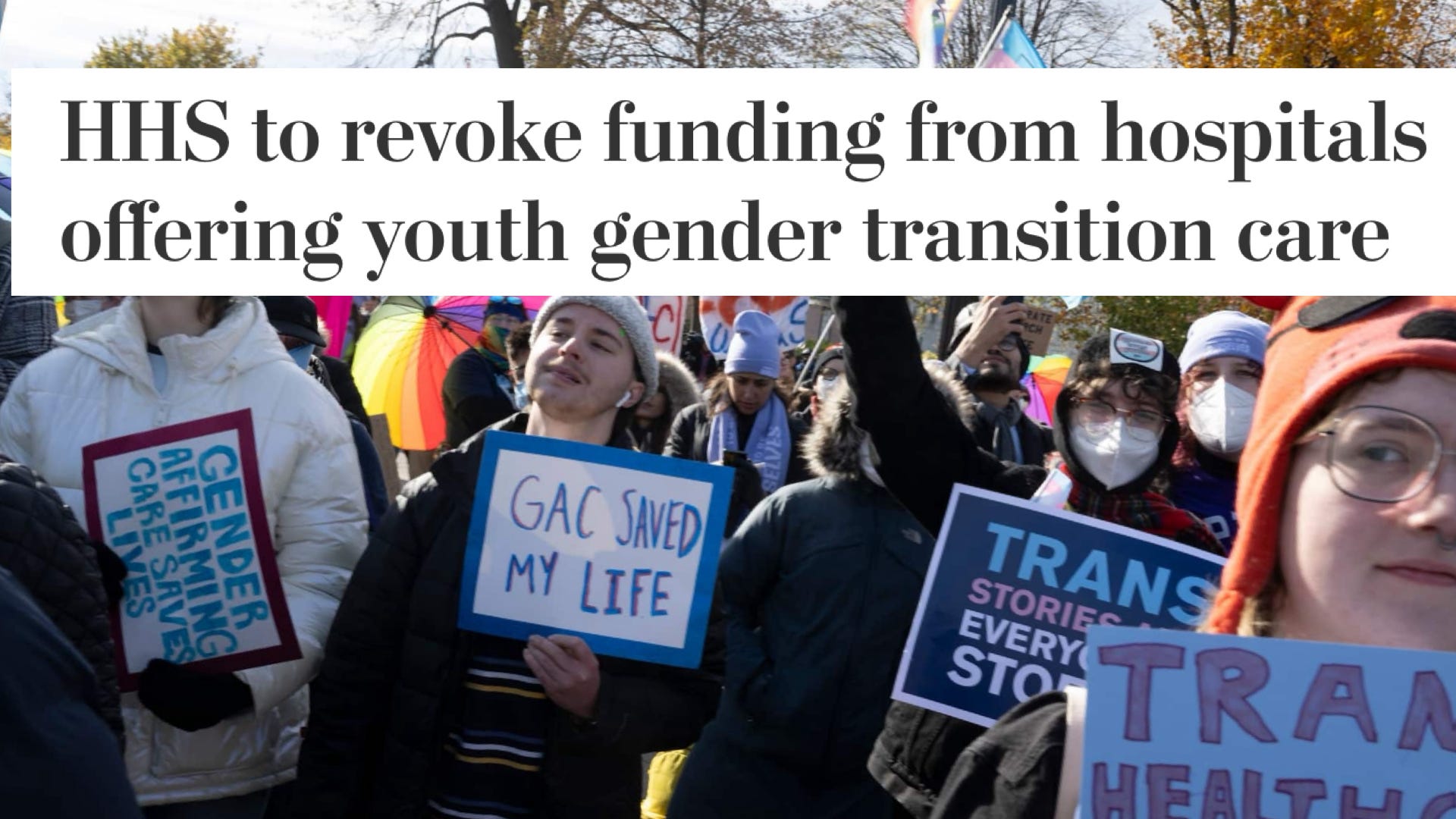
Federal decertification / funding leverage

This is one of the strongest tools because it bypasses culture entirely.

Mechanism

Tie certification, accreditation, or federal funding to:

Verified sex classification

Documented segregation protocols

Auditable placement decisions

Effect

Risk shifts from:

“Public backlash if we act”

→ to

“Guaranteed institutional penalty if we don’t”

Why it works

Administrators are optimized to avoid certain loss

Reputational risk is vague; funding loss is concrete

This is why OSHA, CMS, and the DOJ Civil Rights Division work at all.

Category 2: Strict liability for downstream harm

No intent requirement

Harm occurring under ambiguous sex placement = institutional fault

No defense based on “good faith inclusion”

Examples

*Assault in custody

•Pregnancy in prison

•Privacy violations

•Medical harm traceable to sex misclassification

Key feature

Liability triggers on outcome, not motivation

This eliminates:

•Moral argument loops

•HR paralysis

•”We followed guidance” defenses

Category 3: Mandatory classification + audit trails

Make non-classification itself a violation

Instead of arguing what classification should be:

Require that some classification method be chosen

Require it to be:

•Explicit

•Recorded

•Reviewable

Why this matters

Ambiguity becomes noncompliance

“We didn’t ask” becomes sanctionable

Detection becomes bureaucratically safer than avoidance

This is exactly how:

• Financial KYC

• Aviation safety

• Medical triage

• Nuclear safeguards work

Category 4: Personal accountability for decision-makers

Institutions hide behind diffusion of responsibility.

Break that.

Tools

Named sign-off on placement decisions

Professional discipline exposure

Loss of license or certification

Career liability, not just organizational liability

Result

•Risk calculus changes immediately

•”Do nothing” is no longer the safe option

This is why safety-critical industries assign duty officers.

Category 5: Inversion of the burden of proof

Instead of:

“Prove harm occurred”

Shift to:

“Prove adequate detection was performed”

Operationalization

If harm occurs, institution must demonstrate:

•Classification criteria

•Assessment process

•Segregation logic

•Review cadence

Failure = automatic penalty.

This removes:

•Victim burden

•Media-driven adjudication

•Post-hoc moral debate

Category 6: Metrics that surface suppressed costs

What’s invisible stays cheap.

Require reporting of:

*Sex-based incident rates

•Placement changes

•Complaints disaggregated by sex

•Pregnancy, assault, injury data

Key move

Make data absence itself a red flag

Institutions fear published metrics more than ideology.

Category 7: Parallel protected spaces (exit rather than argument)

Where detection is politically blocked:

Mandate sex-based alternatives

Fund parallel facilities

Require equivalent quality

This:

•Reduces forced-cohabitation risk

•Preserves sex-based safety without surveillance

•Makes refusal costly (duplicated infrastructure)

Why this works better than moral debate

Moral framing:

•Polarizes

•Invites bad-faith interpretation

•Never resolves enforcement

Cost escalation:

•Is boring

•Is technocratic

•Is fast

•Is effective

Biology already solved this:

•Systems that fail to detect parasitism are selected against

•Systems that internalize detection cost survive

Human institutions are no different

One hard truth (worth stating plainly)

You cannot defeat extortive empathy with:

•Better arguments

•Better intentions

•Better messaging

You defeat it by:

Making non-action measurably unsafe for institutions

Once that happens, norms change after incentives do - always.

Expand full comment
J Vee's avatar

I am thrilled with this action but I’m worried that Dems will reinstate the payments if they return to power.

Expand full comment
11 more comments...

No posts

Ready for more?