
Against the Noise: Some Lessons Learned from Four Decades of Reporting
How evidence, persistence, and restraint outlast headlines and outrage
Preparing to teach three long-form courses later this month for the Peterson Academy recently forced me to do something I rarely do: stop and look backward.
Two of those courses—The Secrets of Big Pharma and The Politics of Cancer—are built directly on years of original reporting. The third, Journalism 102: How to Write a Nonfiction Bestseller, sent me back even further, into notebooks, boxes, transcripts, FOIA files, and interviews stretching across four decades. This was not an exercise in nostalgia. It was an inventory. What, exactly, has held up? What habits mattered? What instincts proved durable even as technology, media economics, and public trust changed?
What follows is not advice in the abstract. It is a distillation of what has worked for me—often imperfectly, sometimes at considerable cost and against significant obstacles, and occasionally with a measure of luck.
Follow the Money—Relentlessly, Even When It Sounds Trite
“Follow the money” is one of those phrases journalists repeat so often it risks becoming meaningless. But clichés exist for a reason. When I look back at my own work—on the Vatican, Big Pharma, Motown, the heroin trade—the financial through line was never a sidebar. It was the narrative spine. Even some of my more recent reporting about the pediatric gender industry has been anchored in finances.
Money is motive made visible. It leaves records. It creates paper trails that survive denials, memory lapses, and reputation laundering. In God’s Bankers, financial transactions were the only way to penetrate institutional roadblocks and secrecy. In Pharma, money explained not only corporate behavior but regulatory capture, political indulgence, and medical mythmaking. When it comes to “gender-affirming care” for minors, it explains not just ideological commitments, but why many providers regard it as a goldmine.
If you understand where money originates, where it flows, and who benefits when it moves—or when it does not—you are rarely lost. Everything else tends to organize itself around that axis.
Look for the Story Everyone Else Is Not Chasing
Journalists are competitive by nature. When a major story breaks, dozens—or hundreds—of reporters chase the same core questions. That produces necessary first drafts of history. It also creates blind spots.
Some of the most consequential reporting I have done came not from sprinting after the main storyline harder, but from noticing an anomaly at its edge and being willing to follow that thread without knowing where it would lead.
When I was researching Why America Slept in the immediate aftermath of 9/11, I was covering familiar terrain: intelligence failures, bureaucratic dysfunction, missed warnings. Many others were doing the same. But a deep source mentioned an interrogation that did not fit the prevailing narrative. Following it meant risking months of work that might lead nowhere. It also meant resisting the pressure to remain within the “safe” consensus lane.
That detour became the book’s final chapter—an examination of what a captured al Qaeda operative said about advance knowledge of 9/11 among certain Saudi royals and Pakistan’s air force chief. It was not where I started. It was where the evidence led. That chapter helped propel the book to the top of the bestseller list.
The lesson is not to chase contrarianism for its own sake. It is to remain alert to stories that fall between beats—especially when they make powerful people uncomfortable or disrupt settled assumptions.
Do Not Work Solely for the Paycheck
This is the least practical advice I give—and the one I believe most strongly.
Like every journalist, I have pitched stories and book proposals that did not find willing outlets or publishers. Rejection is part of the profession. But I also say no, with some regularity, to assignments that are offered to me. Not because the money is insufficient, but because I am not persuaded the story matters—or because it substitutes outrage or sensation for illumination. That judgment is necessarily personal. Others will draw the line differently.
By any modern metric, this is not a path to riches. This year marks forty years since the publication of my first book, Mengele, a biography of Auschwitz’s infamous Angel of Death. Four decades later, my wife, Trisha Posner, and I still have a mortgage. We do not have children, which meant that during leaner periods we were willing to cut back in ways that are not always feasible for reporters with families. There are, without question, far easier ways to monetize attention today than slow, document-driven reporting.
But integrity compounds in ways income does not. Once lost, it is almost impossible to recover. If you want readers to trust you when you challenge a dominant narrative, you cannot train them to expect that you will chase clicks when it is convenient.
Be Relentless—but Give the Story a Human Spine
Relentlessness alone produces archives, not books.
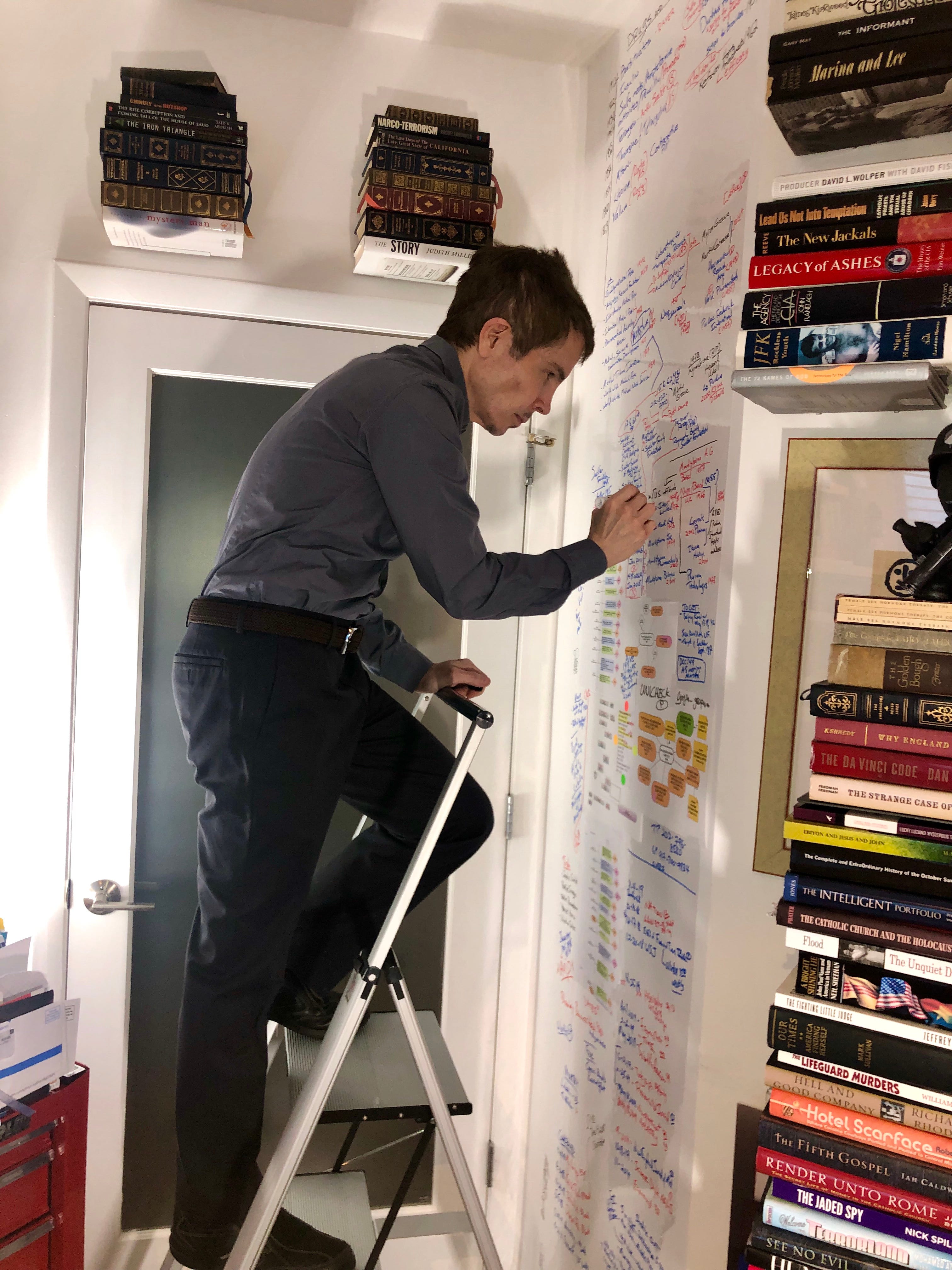
Every major investigation eventually confronts the same problem: excess. Too many documents. Too many timelines. Too many players. The solution is not simplification, but structure. You must find a narrative spine capable of carrying the weight of the reporting.
I have repeatedly turned to biography for that spine: the assassins in the JFK and MLK cases; Berry Gordy for Motown; successive popes for Vatican finance; the Sackler family for the postwar pharmaceutical industry. This is not personalization for drama’s sake. It is accountability. Institutions act through people. Decisions are made by individuals with incentives, fears, ambitions, and blind spots.
Relentlessness means staying with the story long after novelty fades. Structure means shaping that persistence into something readers can follow without being overwhelmed.
Master Records, Data—and Now, AI
Public records remain foundational. Freedom of Information Act requests, court filings, corporate registries, archived correspondence—these are the scaffolding of serious investigative work. FOIA is slow, frustrating, and imperfect. It is also indispensable.
What has changed is the toolset. Artificial intelligence, used properly, is not a substitute for reporting judgment. It is an assistant—one that can surface patterns, cross-reference datasets, flag anomalies, and accelerate preliminary analysis. It does not tell you what matters. But it can help you see what you might otherwise miss—or at the very least, save time in getting to insights you would eventually reach anyway.
The danger lies in outsourcing thinking. The advantage lies in augmentation. Reporters who master both traditional records work and modern analytical tools will have an edge—not because they are faster, but because they are more thorough.
Interview Widely—Not Just Up the Food Chain
Many journalists pursue only marquee names: CEOs, cabinet officials, senior executives. Those voices matter. They are also widely quoted—and often carefully rehearsed.
Some of the most revealing interviews come from people who never appear in press releases: assistants, compliance officers, lab technicians, accountants, archivists, mid-level managers. These are the gatekeepers who understand how institutions really function day to day—and where the hidden stories lie.
That is how I uncovered, for example, the story of how America’s largest financial services firm, Edward Jones, had implemented an aggressive DEI regime that hobbled performance and generated widespread internal dissension. The key source was someone so far down the corporate hierarchy that no one else had thought to ask.
One additional insight: trust is built over time, and almost always in person. Zoom interviews are efficient. They rarely produce breakthroughs. Rapport is not transactional. It is cumulative.
Leave Opinion Out—and Prepare for Lawyers
I do not tell readers what to think. I show them how I know what I know.
That discipline is both philosophical and practical. Opinion ages poorly. Evidence does not. Every nonfiction book I publish undergoes rigorous legal review. Many authors resent that process, viewing it as adversarial. I do not. I find it clarifying. It forces precision, documentation, and restraint.
My legal training helped me internalize this early. But any serious reporter can—and must—learn to anticipate legal vulnerabilities, build evidentiary backstops, and understand where the line is drawn. In a litigious society, confidence without documentation is recklessness.
Develop a Thick Skin—and Use It Wisely
When reporting collides with cherished beliefs, backlash is inevitable. I encounter it frequently when addressing national traumas that have hardened into myth or advocacy-driven narratives. Those deeply invested in conspiracy theories surrounding the JFK and MLK assassinations do not abandon their beliefs when confronted with evidence. They double down. Unable to attack the facts, they often attack the messenger.
I have lost count of the number of times I have been falsely accused of being a CIA agent for concluding that Lee Harvey Oswald, acting alone, killed John F. Kennedy.
The instinctive response is to fight every critic. That is almost always a mistake. The better response is to return to the work: documents, witnesses, logic, transparency. If your conclusions are sound, they will withstand pressure. If they are not, no amount of rhetorical aggression will save them. Denials rarely extinguish wild accusations; they more often fuel them.
Humility—and sometimes silence—are not weaknesses. At times, they are strategic assets.
Looking back, I am struck by how little of this work is glamorous. There are no shortcuts. There is no substitute for time, persistence, and judgment. Technology changes. Platforms rise and fall. The core demands remain stubbornly human.
If these reflections have value, it is because they were earned the hard way—through dead ends, rejections, and moments when the work felt unfinishable. That, I suspect, is the only way such lessons ever become real.
An audio version of this story is available, read by an automated voice.


